Physician-led from day one.
HAIRMDL® was not built by a marketing team. It was built by Dr. Herbert Feinberg, a board-certified dermatologist with forty years of hands-on experience treating hair loss, who wanted a non-surgical treatment as rigorous as the surgical work he performs.
Every formula decision was made based on published clinical literature and outcomes Dr. Feinberg observed directly in practice. No ingredient was added for marketing value. Each one earns its place mechanistically.
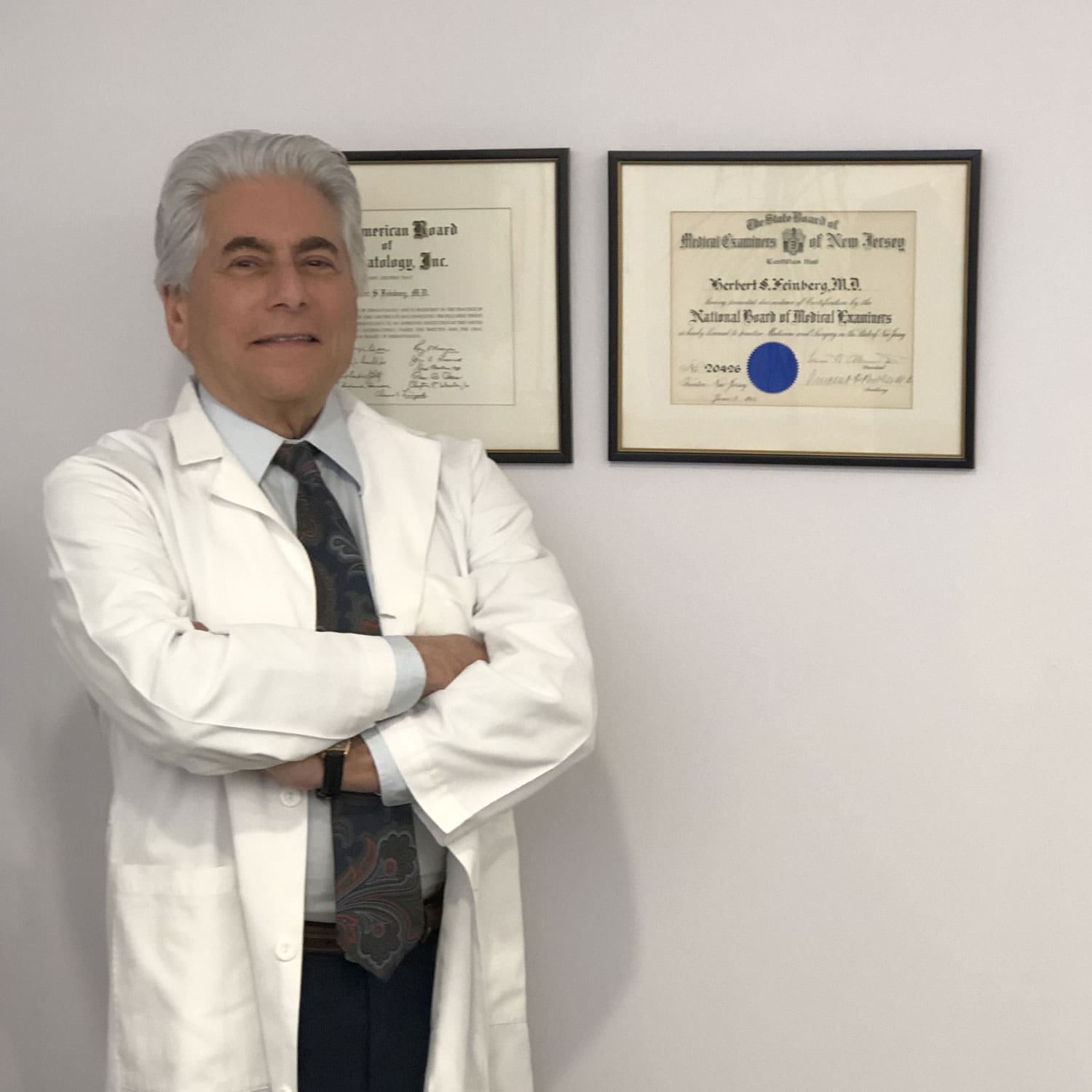
Dr. Herbert Feinberg, MD
Board-Certified Dermatologist · 40+ Years Experience
- American Board of Dermatology, Board Certified
- American Academy of Dermatology, Fellow
- American Society for Dermatologic Surgery, Member
- International Society of Hair Restoration Surgery, Member
- Artas Clinical Excellence Award
- Artas Bronze Award
- Plastic Surgery Select Surgeons
- New World Report, Most Advanced Hair Transplantation Specialist, North Atlantic USA
"No single ingredient is a silver bullet. Hair loss is multifactorial: DHT, blood flow, inflammation, growth-phase cycling. Address them all simultaneously, and you get real results."
Six actives. One application. Every mechanism covered.
Most hair loss treatments use a single active ingredient. HAIRMDL® combines six prescription-grade actives in one daily topical, each targeting a different biological pathway behind hair loss. Where OTC treatments address one mechanism, this formula addresses all of them simultaneously.
1. Minoxidil (Vasodilator)
Reopens blood supply to dormant follicles.
Minoxidil is the most widely studied topical hair loss treatment in history. It works by widening blood vessels around hair follicles, increasing oxygen, nutrients, and growth signals to cells that have been starving. At the concentration used in the HAIRMDL formula, it significantly outperforms standard over-the-counter products.
Mechanism
Minoxidil sulfate, the active metabolite, opens ATP-sensitive potassium channels in vascular smooth muscle cells. This causes hyperpolarization and vasodilation, directly increasing blood perfusion to the follicle. It also upregulates VEGF and extends the anagen growth phase.
2. Dutasteride (5-Alpha Reductase Inhibitor)
Shuts down DHT, the primary driver of follicle miniaturization.
Dihydrotestosterone (DHT) binds to receptors in genetically susceptible follicles and progressively shrinks them. Dutasteride inhibits both Type 1 and Type 2 isoforms of 5-alpha reductase, unlike finasteride which only blocks Type 2. This dual inhibition produces a more complete DHT suppression at the scalp level.
Mechanism
Applied topically, dutasteride acts locally on the scalp without the systemic hormone suppression associated with oral administration. The formula uses a concentration calibrated to be clinically effective while minimizing systemic absorption.
Not included in the Women's formula.
3. Latanoprost (Prostaglandin Analogue)
Prolongs the growth phase and increases follicle diameter.
Latanoprost was first approved for glaucoma. Physicians noticed an unexpected side effect: patients grew thicker, longer eyelashes. Further research confirmed it stimulates prostaglandin receptors in the hair follicle, activating pathways that extend the anagen cycle and increase follicle cross-sectional area.
Mechanism
Latanoprost acts as a prostaglandin F2α analogue that binds FP receptors on dermal papilla cells. This agonism promotes follicle cycling from telogen back into anagen, and has been shown in randomized trials to produce a statistically significant increase in hair density versus placebo.
4. Tretinoin (Retinoid)
Multiplies absorption of every other active by up to 3x.
Tretinoin was not added for hair growth directly. It was added because it makes everything else work better. By increasing epidermal turnover and altering the lipid barrier of the scalp, tretinoin dramatically improves the percutaneous absorption of every co-applied active ingredient.
Mechanism
Tretinoin binds nuclear retinoic acid receptors (RAR) and modulates gene expression in keratinocytes, accelerating cell turnover, increasing scalp vascularity, and thinning the stratum corneum. This creates a more permeable delivery surface for co-applied actives.
5. Caffeine (Methylxanthine)
Blocks DHT activity at the cellular level.
Applied topically, caffeine counteracts the growth-suppressing effects of DHT on follicles, independent of the 5-AR enzyme pathway that dutasteride targets. This gives the formula a second complementary DHT-blocking mechanism working simultaneously.
Mechanism
Caffeine inhibits phosphodiesterase (PDE), raising cyclic AMP (cAMP) levels in hair matrix cells. Elevated cAMP promotes cell proliferation and suppresses the apoptotic signaling triggered by DHT. Combined with dutasteride, the two actives target DHT suppression via different pathways.
6. Triamcinolone (Corticosteroid)
Calms scalp inflammation that silently accelerates hair loss.
Chronic scalp microinflammation is increasingly recognized as a contributor to androgenetic alopecia. Perifollicular fibrosis driven by subclinical inflammation can permanently damage follicles over time. Triamcinolone at a low topical dose addresses this often-overlooked dimension of hair loss.
Mechanism
As a glucocorticoid, triamcinolone suppresses the production of pro-inflammatory cytokines (IL-1, TNF-alpha) and reduces mast cell activity around follicles. Formulated below the threshold for systemic absorption, it is appropriate for daily topical use under physician supervision.
Pharmaceutical-grade ingredients. No substitutions.
Every active ingredient in the HAIRMDL® formula is sourced at pharmaceutical grade, the same standard required for FDA-regulated drug manufacturing. Purity, potency, and identity are verified at intake before compounding begins.
USP / NF Grade
All actives meet United States Pharmacopeia or National Formulary purity standards.
Certificate of Analysis
Each ingredient batch ships with a CoA from the supplier, reviewed before use.
Chain of Custody
Sourcing records are maintained from supplier through dispensing for every patient order.
Every batch tested before it ships.
HAIRMDL® is prepared in a licensed 503A compounding pharmacy operating under USP Chapter 797 standards, with batch-level potency and sterility verification on every production run.
Potency Testing
HPLC analysis confirms active ingredient concentrations are within specification on every batch.
Sterility and Endotoxin
Each batch undergoes sterility testing and endotoxin screening per USP 71 and 85.
Stability Studies
Formulation stability is verified across temperature and humidity ranges reflective of real storage conditions.
BUD Assignment
Beyond-use dates are assigned based on stability data, not default assumptions.
The evidence behind each ingredient.
None of the actives in the HAIRMDL® formula were chosen speculatively. Each has been studied in peer-reviewed, randomized controlled trials with the mechanism of action understood at the molecular level.
Minoxidil
In a 48-week RCT, higher-concentration topical minoxidil produced significantly greater hair count and weight compared to 2% minoxidil and placebo.
Olsen EA et al. J Am Acad Dermatol. 2002.
Dutasteride
Topical dutasteride demonstrated superior hair count improvement versus placebo at 24 weeks in men with androgenetic alopecia, with minimal systemic hormone impact.
Eun HC et al. J Am Acad Dermatol. 2010.
Latanoprost
In a randomized, double-blind trial, topical latanoprost significantly increased hair density versus placebo at 24 weeks.
Blume-Peytavi U et al. J Am Acad Dermatol. 2012.
Tretinoin
Co-administration of tretinoin with minoxidil increased percutaneous minoxidil absorption by up to 3x compared to minoxidil alone.
Ferry JJ et al. J Invest Dermatol. 1990.
Caffeine
In vitro studies demonstrated topical caffeine counteracted the DHT-mediated suppression of hair follicle growth by inhibiting PDE and elevating cAMP in hair matrix cells.
Fischer TW et al. Int J Dermatol. 2007.
What we have learned treating 15,000+ patients.
After four decades and thousands of patients, Dr. Feinberg's perspective on hair loss treatment is grounded in outcomes, not optimism.
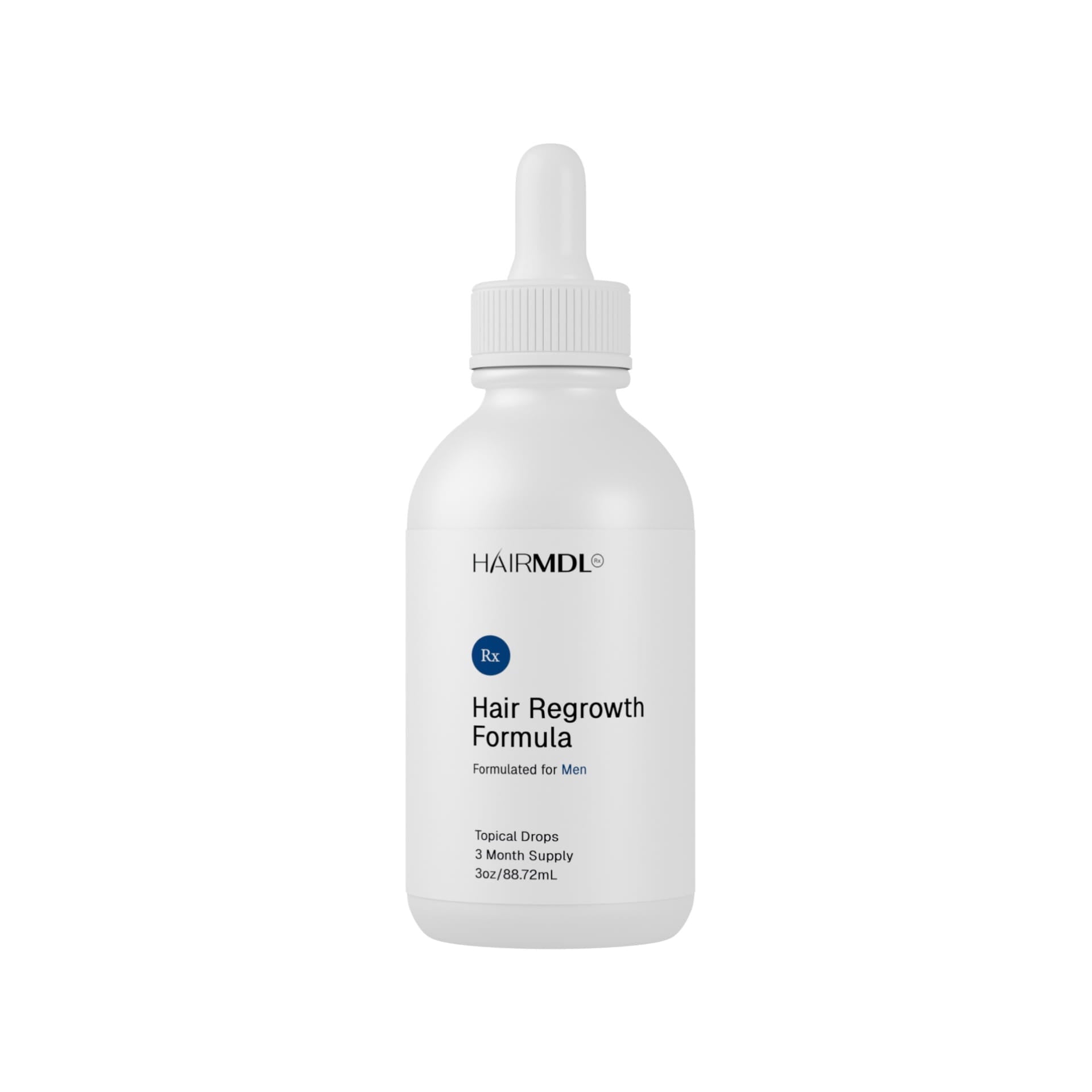
Early intervention is everything.
The single biggest predictor of treatment success is how early a patient starts. Hair follicles that have been miniaturized for years are much harder to recover than follicles in early decline. The best time to start was before you noticed the loss. The second best time is now.
Consistency beats intensity.
A patient who applies the formula daily for six months will always outperform a patient who uses it sporadically for a year. The actives need sustained presence at the follicle to shift the biology. Missing days can actively reset progress.
Shedding in the first weeks is a good sign.
Patients are often alarmed by increased shedding in the first 4 to 8 weeks of treatment. This is the follicle cycling out old, miniaturized hairs to make way for a new, stronger anagen phase. It is evidence the formula is working.
Topical beats oral for most people.
Oral 5-AR inhibitors are effective, but they carry systemic side effect profiles that reasonably concern many patients. Topical application delivers actives directly to the follicle with dramatically less systemic exposure. For the vast majority of patients, topical is the right first approach.
These statements are based on aggregate patient data and published clinical literature. This page is for educational purposes only and does not constitute medical advice. Individual results vary.